In Korea, over two-thirds of precipitation occurs during the flooding season. Along with this, rapidly changing river water flow makes it important to hold and release water through dams. To create the value of water, even in changing water management conditions such as abnormal climate in recent years, K-water uses advanced technologies for the integrated operation of water management facilities. K-water continues to make strong efforts to improve credibility of the water supply through the establishment of a water supply system that reflects the water circulation system.
- K-water will always be there for the Integrated Water Resources Management of dams, weirs and rivers.
- K-water’s own competitiveness lies in the safe integration & management of water resources.
- K-water will do its best to pursue & ensure the sustainable development of reliable water supply through its own IWRM(Integrated Water Resources Management) practices.
K-water has applied IWRM (integrated water resource management) practices across the whole process of water cycle, which would enable the efficient use and management of water resources, including rainfall and water flowing from basins and rivers.
- With an aim to increase the value of water despite changing environment for water resource management as accompanied by extreme weather events, K-water has pursued the integrated operation of various water resource management infrastructure with its own advanced technologies.
In Korea, two thirds of gross rainfall is concentrated in the wet season, along with extreme variations in river discharge, which is why it is very necessary to control water storage and discharge with dams and other hydraulic structures.
K-water has operated & maintained 17 multipurpose dams, 14 dams dedicated to water supply, and Nakdong R. Estuary Barrage with its own ICT-based water management system to ensure the optimal management of water storage & discharge.
Their flood control capacity account for 95% of the gross domestic flood control capacity or 4.9 billion tons, with their water supply capacity explaining 66% of the gross domestic water supply capacity or 12.4 billion tons.
- Operation and Management of Water Resources Facilities
Multi-purpose dams are operated to satisfy various purposes including flood control, water supply, and hydropower generation. For these functions, it is absolutely essential to secure optimal operation of water gates through continuous measurements and analysis of information on rainfall, inflow and outflow, weather conditions, and water quality. In the future, K-water will exert all of its efforts to maintain scientific operation and management of water resources through implementation of an Integrated Water Resources Management system for each river system
-
Hangang System
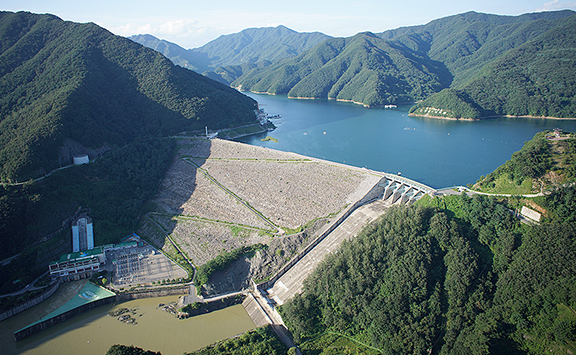
Soyanggang Multi-purpose Dam
- Type: Multi-Purpose Dam
- Height: 123m
- Water Storage Capacity: 1,900 (million ㎥)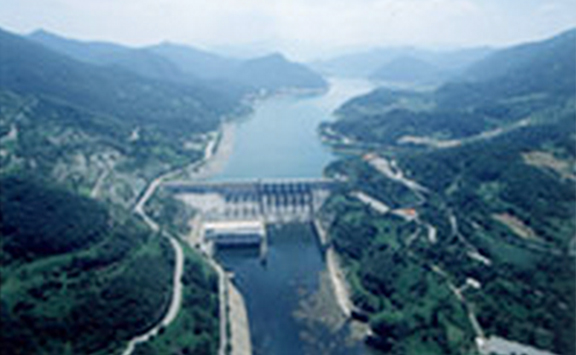
Chungju Multi-purpose Dam
- Type: Multi-Purpose Dam
- Height: 97.5m
- Water Storage Capacity: 1,789 (million ㎥)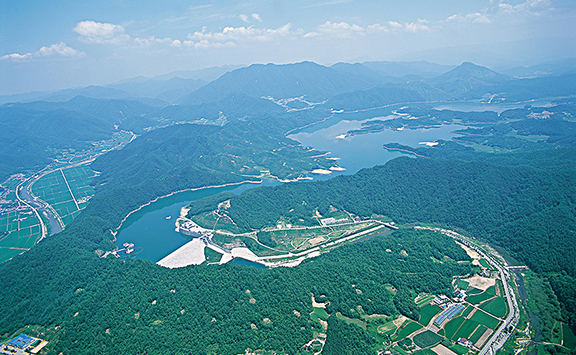
Hoengseong Multi-Purpose Dam
- Type: Multi-Purpose Dam
- Height: 48.5m
- Water Storage Capacity: 73.4 (million ㎥)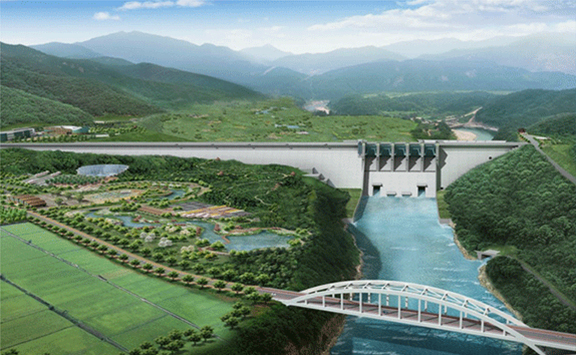
Hantangang Flood Control Dam
- Type: Flood-Control Dam
- Height: 83.5m
- Water Storage Capacity: 270 (million ㎥)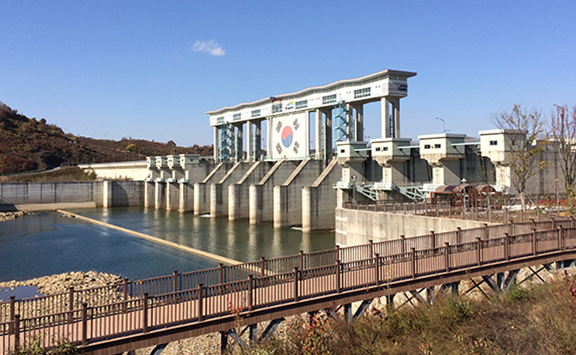
Gunnam Flood Control Site
- Type: Water Level Observatory
- Height: 25.46m (ELm)
- Flow Rate: 0.0㎥/s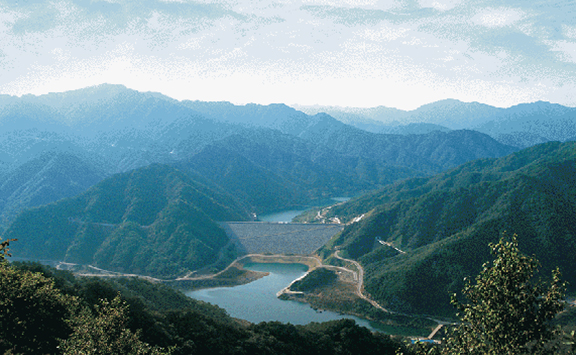
Pyeonghwa Dam
- Types: Flood-Control Dam
- Height: 125m
- Water Storage Capacity: 2,630 (million ㎥)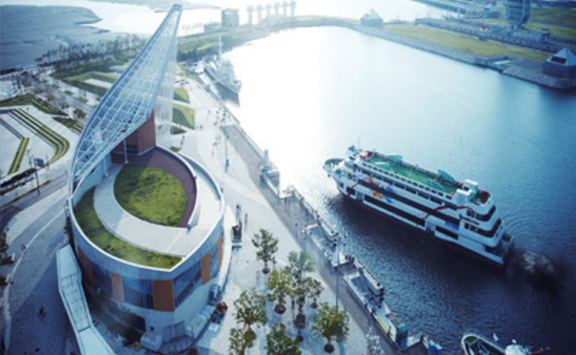
Gyeongin ArabaetgilAra Waterways / Gulpocheon Water Release Dam
- Total Gates: four
- Size: B12.5 × H 9.5
- Planned Released Amount: 1,480 ㎥/s
Ipo Reservoir
Length: 591 m
Height: 6 m
Basin Area: 11803 ㎢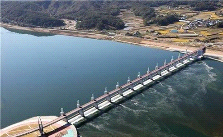
Yeoju Reservoir
Length: 513 m
Height: 8 m
Basin Area: 11115 ㎢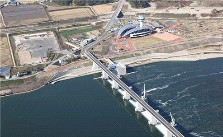
Gangcheon Reservoir
Length: 591 m
Height: 6 m
Basin Area: 11803 ㎢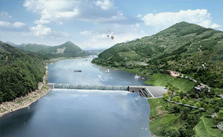
Danyang Reservoir
Length: 328 m
Height: 25 m
Altitude above sea level: 132m -
Nakdongang System
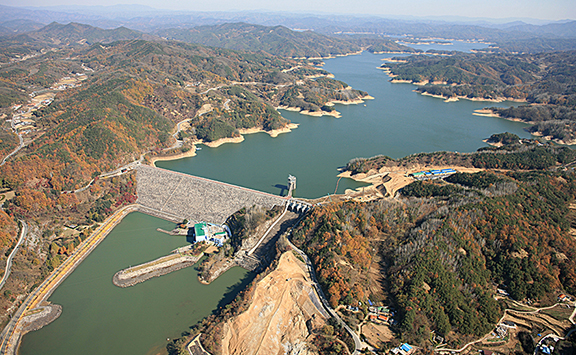
Andong Multi-purpose Dam
- Type: Multi-Purpose Dam
- Height: 83m
- Water Storage Capacity: 1,000 (million ㎥)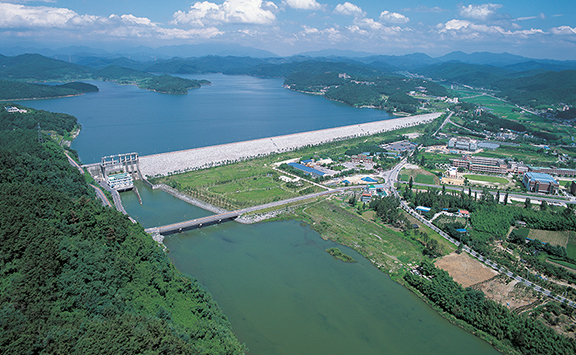
Namgang Multi-purpose Dam
- Type: Multi-Purpose Dam
- Height: 34m
- Water Storage Capacity: 299.7 (million ㎥)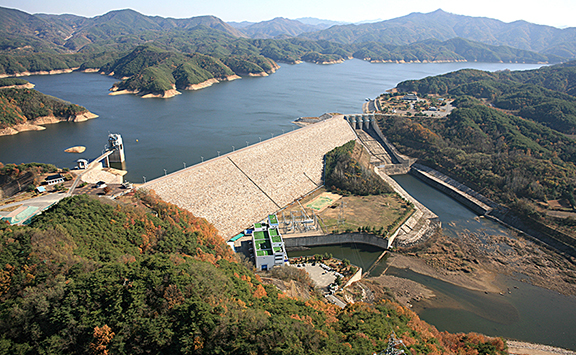
Imha Multi-purpose Dam
- Type: Multi-Purpose Dam
- Height: 73m
- Water Storage Capacity: 424 (million ㎥)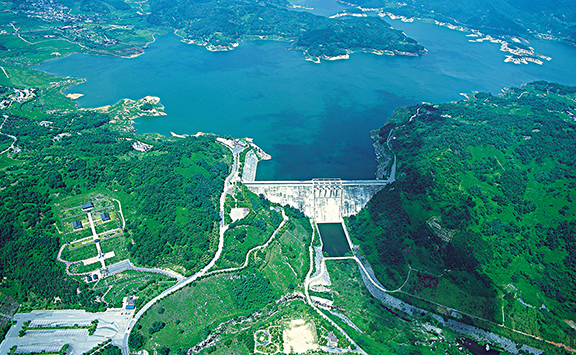
Hapcheon Multi-purpose Dam
- Type: Multi-Purpose Dam
- Height: 96m
- Water Storage Capacity: 560 (million ㎥)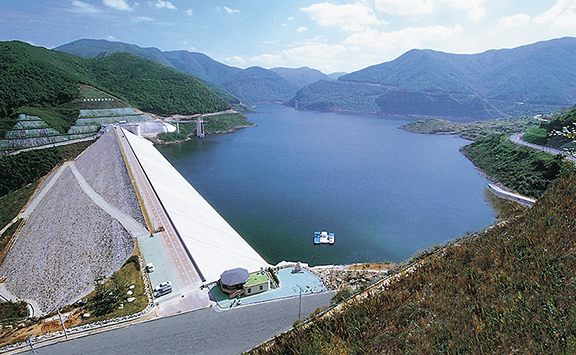
Milyang Multi-purpose Dam
- Type: Multi-Purpose Dam
- Height: 89m
- Water Storage Capacity: 69.8 (million ㎥)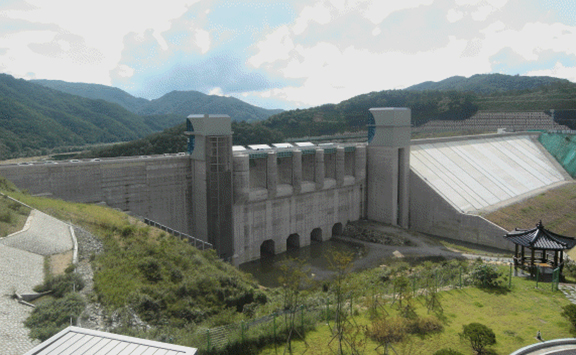
Yeongju Multi-Purpose Dam
- Type: Multi-Purpose Dam
- Height: 55.5m
- Water Storage Capacity: 160.4 (million ㎥)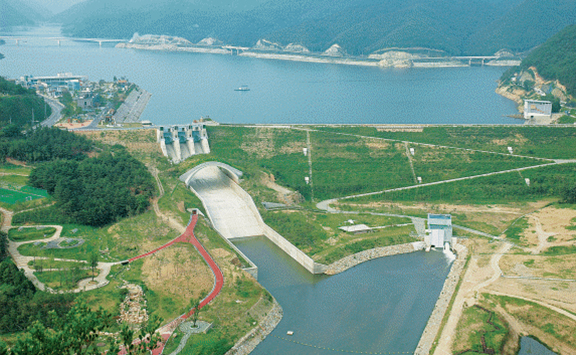
Gunwi Multi-Purpose Dam
- Type: Multi-Purpose Dam
- Height: 45m
- Water Storage Capacity: 40.1 (million ㎥)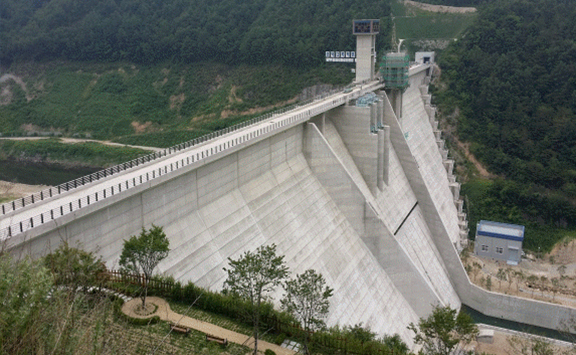
Seongdeok Multi-Purpose Dam
- Type: Multi-Purpose Dam
- Height: 58.5m
- Water Storage Capacity: 24.8 (million ㎥)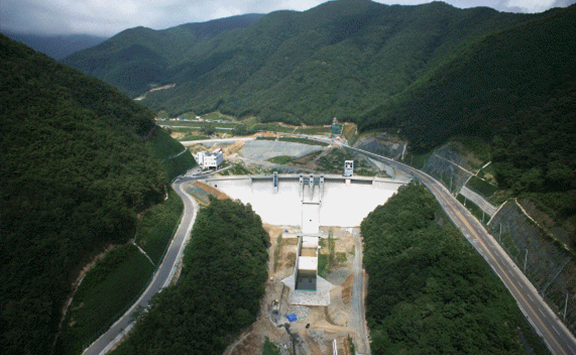
Bohyeonsan Multi-Purpose Dam
- Type: Multi-Purpose Dam
- Height: 58.5m
- Water Storage Capacity: 17.88 (million ㎥)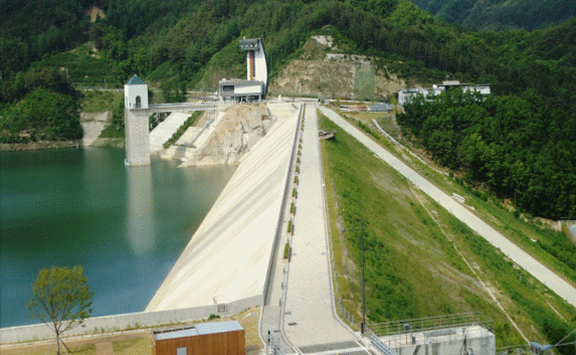
Gimcheon Buhang Multi-Purpose Dam
- Type: Multi-Purpose Dam
- Height: 64m
- Water Storage Capacity: 42.6 (million ㎥)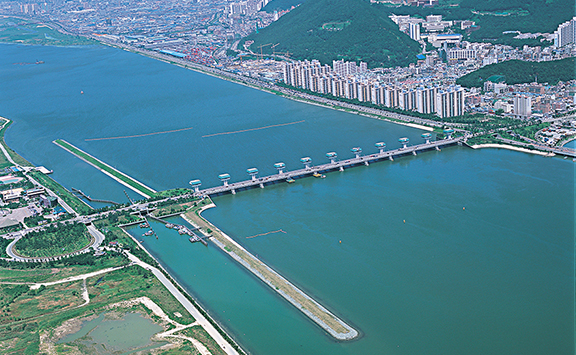
Nakdonggang Estuary Barrage
- Type: Estuary Barrage
- Height: 18.7m
- High Tide: 0 (million ㎥)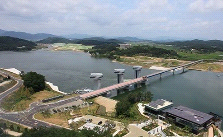
Sangju Reservoir
Length: 335m
Height: 11m
Basin Area: 7407㎢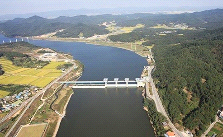
Nakdan Reservoir
Length: 286m
Height: 11.5m
Basin Area: 9221㎢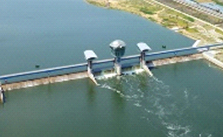
Gumi Reservoir
Length: 374.3m
Height: 11m
Basin Area: 9557㎢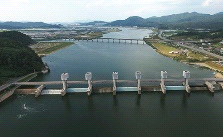
Chilgok Reservoir
Length: 400m
Height: 11.8m
Basin Area: 11040㎢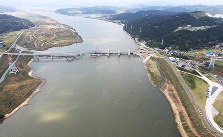
Gangjeong Goryeong Reservoir
Length: 953.5m
Height: 11.5m
Basin Area: 11667㎢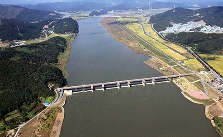
Dalseong Reservoir
Length: 580m
Height: 9.5m
Basin Area: 14248㎢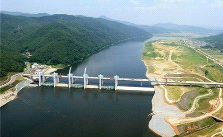
Hapcheon Changnyeong Reservoir
Length: 328m
Height: 11.5m
Basin Area: 15074㎢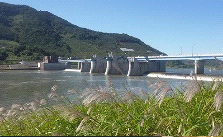
Changnyeong Haman Reservoir
Length: 549.3m
Height: 10.7m
Basin Area: 20697㎢ -
Geumgang, Yeongsangang, and Seomjingang System
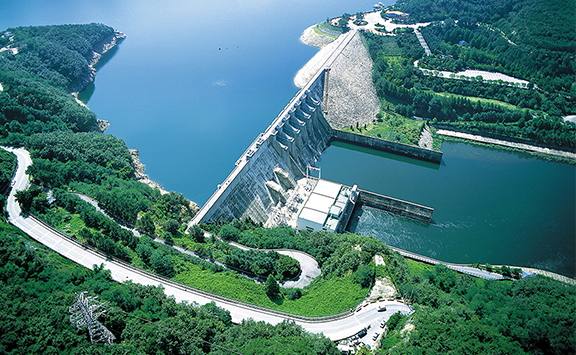
Daecheong Multi-purpose Dam
- Type: Multi-Purpose Dam
- Height: 72m
- Water Storage Capacity: 790 (million ㎥)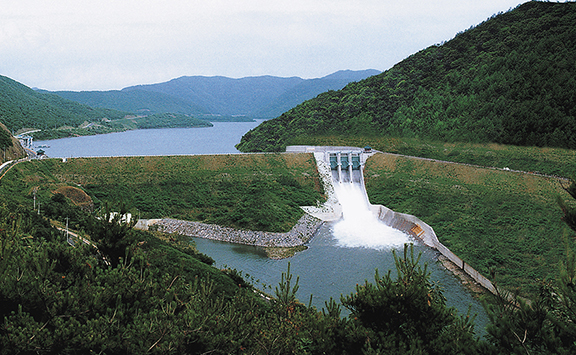
Boryeong Multi-purpose Dam
- Type: Multi-Purpose Dam
- Height: 50m
- Water Storage Capacity: 108.7 (million ㎥)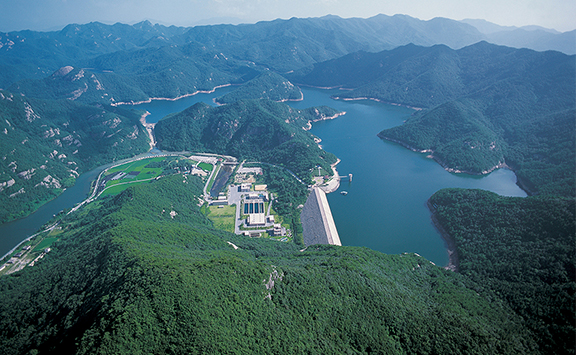
Buan Multi-purpose Dam
- Type: Multi-Purpose Dam
- Height: 50m
- Water Storage Capacity: 35.6 (million ㎥)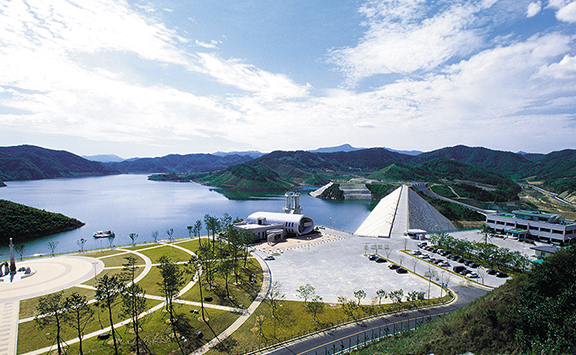
Yongdam Multi-purpose Dam
- Type: Multi-Purpose Dam
- Height: 70m
- Water Storage Capacity: 672 (million ㎥)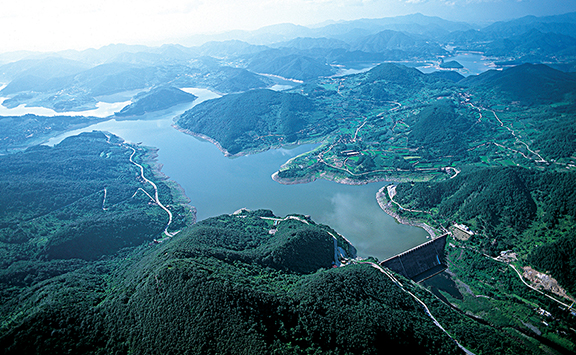
Seomjingang Multi-purpose Dam
- Type: Multi-Purpose Dam
- Height: 64m
- Water Storage Capacity: 370 (million ㎥)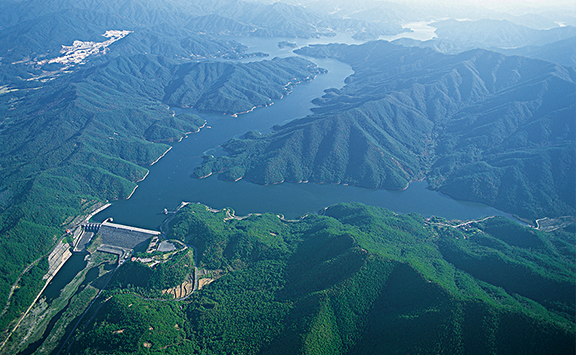
Juam Multi-purpose Dam
- Type: Multi-Purpose Dam
- Height: 58m
- Water Storage Capacity: 352 (million ㎥)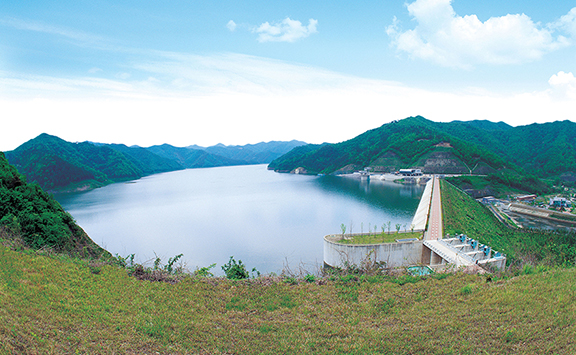
Jangheung multipurpose dam
- Type: Multi-Purpose Dam
- Height: 53m
- Water Storage Capacity: 171 (million ㎥)Damyang Flood Control Dam
- Type: Flood Control Dam
- Height: 19.05m
- Water Storage Capacity: 3.75 (million ㎥)
Damyang Flood Control Reservoir
Type: flood control dam
Height: 19.05m
Effective storage: 3.75 (million ㎥)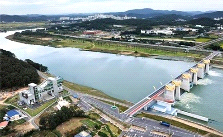
Gongju Reservoir
Length: 280 m
Height: 7 m
Basin Area: 7701 ㎢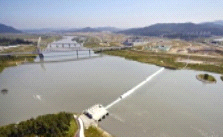
Sejong Reservoir
Length: 348 m
Height: 2.84 m
Basin Area: 6942 ㎢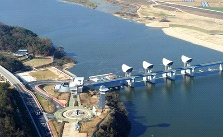
Baekje Reservoir
Length: 311 m
Height: 7.2 m
Basin Area: 7976 ㎢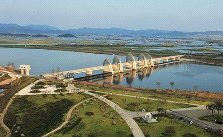
Seungchon Reservoir
Length: 512 m
Height: 7.505 m
Basin Area: 1327 ㎢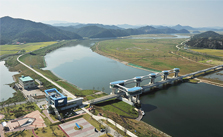
Juksan Reservoir
Length: 184 m
Height: 7.13 m
Construction of Water Resources Facilities
As Korea’s water resources are dominated by intense summer rainfall, it is necessary to prevent floods as well as to secure stable water supply through continuous construction of dams. As construction of a dam normally takes at least 10 years, it needs to be implemented based on a multi-dimensional and long-term perspective of demand for water.